
NVIDIA GTC 2026: Agentic AI, NemoClaw, and the Next Wave of Intelligent Systems
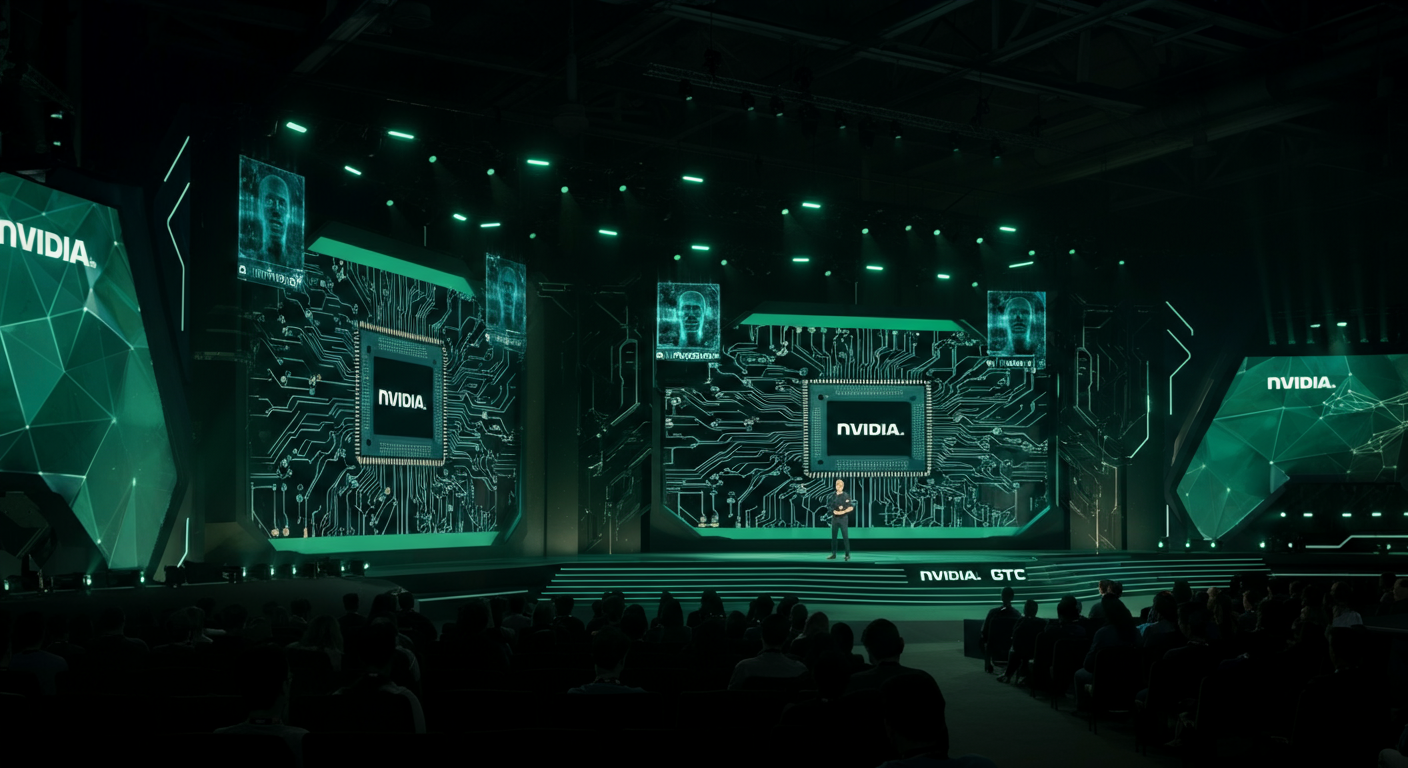
NVIDIA's annual GTC conference wrapped up this week in Silicon Valley, and the headline wasn't just about faster chips — it was about a fundamental shift in how AI systems operate. Jensen Huang's keynote laid out a vision where AI moves from passive assistant to active agent, capable of running complex workflows autonomously.
NemoClaw: One Command to Rule Them All
The most developer-focused announcement was NemoClaw, NVIDIA's new open runtime for running OpenClaw agents. With a single command, NemoClaw installs the OpenShell runtime and NVIDIA Agent Toolkit, then routes inference intelligently between local Nemotron models and cloud-based models based on policies you define. A built-in privacy router decides where each request executes — keeping sensitive data on-device when needed, and offloading to the cloud when speed matters more.
NemoClaw runs on RTX PCs, RTX PRO workstations, and DGX systems, making it accessible to a wide range of developers. It's currently in early preview, released as part of the broader OpenClaw ecosystem rollout at GTC 2026.
Nemotron 3 Super: Open, Efficient, and Built for Agents
Alongside NemoClaw, NVIDIA unveiled Nemotron 3 Super — a 120B parameter open model built on a hybrid Mixture-of-Experts (MoE) architecture. Independent benchmarking from Artificial Analysis ranks it as the most open and efficient model in its class, with leading scores on coding, reasoning, and agentic benchmarks.
Nemotron 3 Super joins Nemotron 3 Nano (already released) and the upcoming Nemotron 3 Ultra, giving developers a full spectrum of open models to build next-generation AI agents. All models are available with ready-to-use cookbooks on Hugging Face.
World Models: The Next Frontier
GTC 2026 also shone a spotlight on World Models — AI systems that simulate real-world complexity through action-conditioned neural networks. These models enable efficient prediction and planning, and are driving breakthroughs in robotics and autonomous driving. Major investments from companies like General Intuition and World Labs underscore the momentum behind this approach.
V-JEPA 2, one of the leading world model architectures, achieved zero-shot robot planning after training on just 62 hours of domain-specific data — a remarkable result that hints at how quickly physical AI is maturing.
What This Means for Developers
GTC 2026 made one thing clear: the era of AI as a chat interface is giving way to AI as infrastructure. NemoClaw, Nemotron 3, and the broader OpenClaw ecosystem are designed for developers who want to build agents that run continuously, make decisions, and integrate with real-world tools and environments.
For teams building on Webdivs, this shift is directly relevant. Whether you're exploring AI-powered DevOps pipelines, intelligent ecommerce automation, or agentic SEO workflows, the tools announced at GTC 2026 are moving from research to production-ready.
Related Articles
Anthropic vs. the Pentagon: What the AI Safety Standoff Means for the Industry
Anthropic's refusal to allow unrestricted military use of Claude led to a Pentagon blacklisting and a lawsuit — setting up one of the most consequential AI policy battles of 2026. Here's what happened and why it matters.

OpenAI's GPT-5.4 Family: Smaller, Faster, and Closing the Gap with Frontier Models
OpenAI released GPT-5.4 mini and nano this week — smaller, faster models designed for high-volume workloads. Here's what changed, what it costs, and why it matters for developers building at scale.
Want to Apply These Insights to Your Next Project?
Let's turn knowledge into results. Contact our experts to discuss your business goals.
Contact Our Team