
OpenAI's GPT-5.4 Family: Smaller, Faster, and Closing the Gap with Frontier Models

OpenAI has been on a rapid release cadence in 2026, and this week added two more models to its growing lineup: GPT-5.4 mini and GPT-5.4 nano. These aren't just incremental updates — they represent a deliberate strategy to bring frontier-level intelligence to cost-sensitive, high-throughput use cases.
What's New in GPT-5.4 Mini and Nano
GPT-5.4 mini is designed for teams that need strong performance without the cost of the full GPT-5.4 model. According to OpenAI, it improves substantially over GPT-5 mini and approaches the larger GPT-5.4 on several benchmarks — a meaningful jump for a model at this price tier.
GPT-5.4 nano goes even further in the efficiency direction, targeting lightweight tasks like classification, extraction, and ranking. It's built for scenarios where you're running millions of inferences and every fraction of a cent matters.
Both models are available across ChatGPT, the API, and Codex.
The Broader Context: A Race to the Bottom (in a Good Way)
The release of GPT-5.4 mini and nano fits into a broader industry trend: frontier AI performance is getting dramatically cheaper. Earlier this month, OpenAI also released GPT-5.4 and GPT-5.4 Pro, which combine advances in reasoning, coding, and tool use for professional workflows.
For context, Gemini 3.1 Flash-Lite from Google launched at $0.25 per million input tokens — frontier performance at commodity pricing. The competitive pressure is forcing every major lab to optimize aggressively, and developers are the clear winners.
The Million-Token Context Window
One of the most significant features of the GPT-5.4 family is the one-million-token context window. This puts OpenAI on par with Google's Gemini and Anthropic's Claude Opus 4.6, which also recently made its 1M context window generally available at standard pricing.
A million-token context means you can feed entire codebases, lengthy legal documents, or months of conversation history into a single prompt — without truncation or compaction. For developers building complex agentic workflows, this is a game-changer.
What Developers Should Do Now
If you're currently using GPT-5 mini for classification, summarization, or extraction tasks, GPT-5.4 mini is worth evaluating immediately. The performance gains at similar price points are significant enough to justify a benchmark run.
For teams building on Webdivs, these models open up new possibilities for intelligent content pipelines, automated SEO analysis, and real-time ecommerce personalization — all at costs that make production deployment viable.
Related Articles

Anthropic vs. the Pentagon: What the AI Safety Standoff Means for the Industry
Anthropic's refusal to allow unrestricted military use of Claude led to a Pentagon blacklisting and a lawsuit — setting up one of the most consequential AI policy battles of 2026. Here's what happened and why it matters.
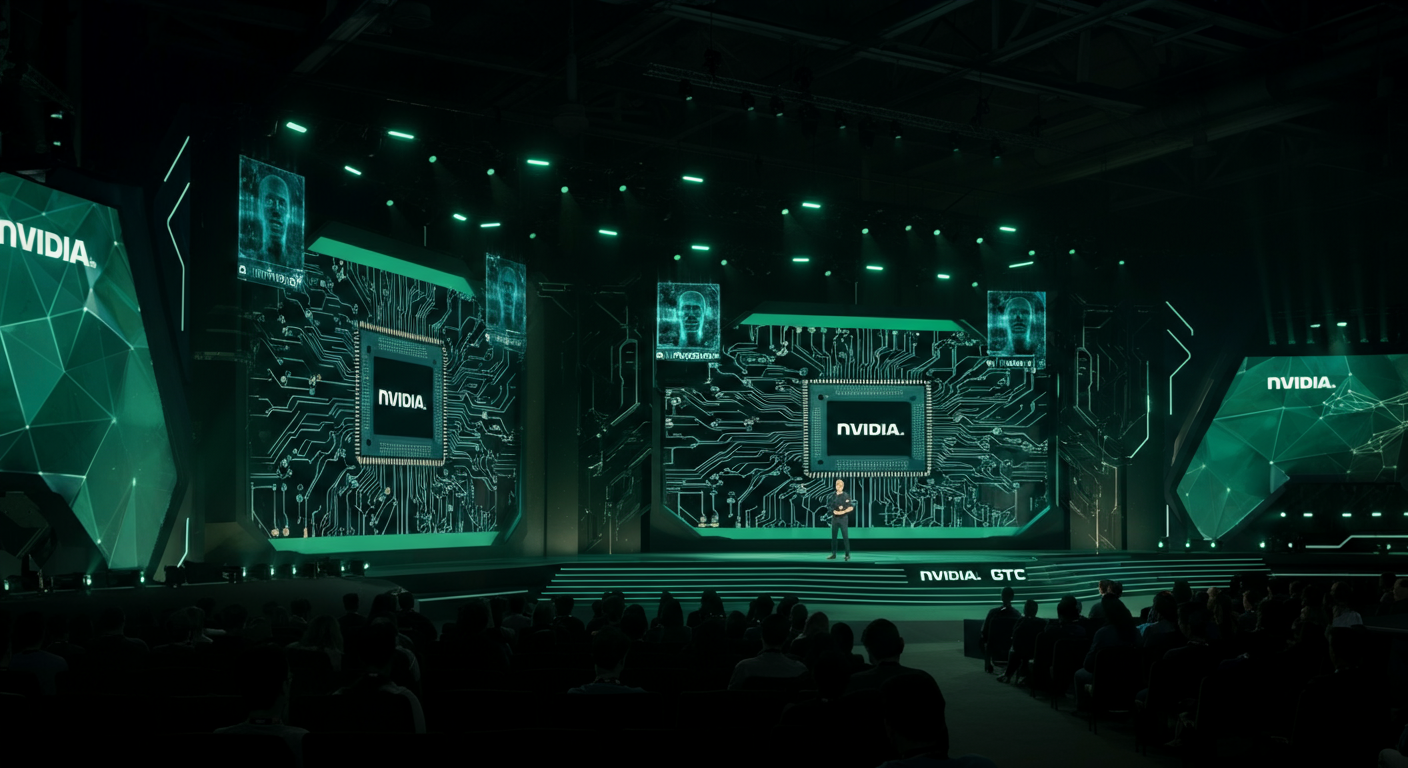
NVIDIA GTC 2026: Agentic AI, NemoClaw, and the Next Wave of Intelligent Systems
NVIDIA's GTC 2026 conference delivered a wave of announcements that signal a decisive shift toward agentic AI — systems that don't just answer questions, but plan, execute, and adapt. Here's what you need to know.
Want to Apply These Insights to Your Next Project?
Let's turn knowledge into results. Contact our experts to discuss your business goals.
Contact Our Team